
Mike Amundsen has been writing about hypermedia, REST, microservices, and the semantics of the web for the better part of two decades. In this conversation we walk the lineage — Paul Otlet, Ted Nelson, Wendy Hall, Leonard Richardson — through hypermedia and into the contemporary conversation around capabilities, affordances, and agentic systems. Mike makes the case that capabilities are not just an architectural pattern but a worldview: the ability to do something, made meaningful through ontology, taxonomy, and choreography. Along the way we talk about what the web has become, why microservices still matter, what "agency" really means in an agentic system, and how to stay grounded — and keep your spark — when the hype cycle pulls everyone toward whatever today's tulip happens to be.
API Evangelist Conversation with Mike Amundsen on the Lineage of the Web, Hypermedia, Capabilities, and What Comes Next
Conversation
Who are you?
My name is Mike Amundsen. I work as an author, API designer, speaker, and trainer, and I’ve been doing this for several decades, and I still enjoy every single day.
What did you learn writing books across the decades?
I learn something new every time I sit down to write. First of all, most of those books were collaborations — I love working with collaborators, with other people. The other thing I’ve learned is that you write for the time you’re in. There’s a lot of change between “Building Hypermedia APIs” and “RESTful Web API Patterns and Practices” — that’s ten years or so — and that change reflects change in the environment, change in the audience, change in myself. When I go back and look at one of those books it reminds me of the time it was in. There’s a transience and a change that you can capture, and you only see it when you see your work in a list like this.
How do you feel about the web today?
In the very earliest stages, when I first experienced it in the late nineties and early aughts, the web to me represented a collaboration space, a cooperative space, an open space. I’m paraphrasing here, but Ted Nelson thought of this idea that the web would be a place where anyone can say anything about everything without having to get permission. That attracted me greatly. Over the decades, the web now to me represents commerce, storefront, sort of like a mining operation. It is not at all what I had imagined twenty-five years ago, and I think we’re less for that. We needed, and we still need, that kind of open collaborative space, and I don’t think we have it as much as I think we need it. There’s an awful lot of privatization and monetization of so many things we do — even our conversations get monetized and mined.
After a decade of microservices, what are your thoughts?
I think microservices are just as valuable and powerful as they were ten or fifteen years ago. The space is also just as littered with productization and misinformation as anything else. I still employ a lot of microservices in the things I do in my little laboratory. The “Microservice Architecture” book I wrote with Matt McLarty, Irakli Nadareishvili, and Ronnie Mitra was our attempt to capture the essence of what we thought microservices were — and I think most of that is still true, but the landscape for products and services has changed vastly. They’re incredibly powerful when you think about linking them actively together and using them as tools rather than as destinations.
What is hypermedia?
For me hypermedia is the notion of being able to make connections — and the connections themselves are what I think are most powerful, not the endpoints, not the things on either end. It’s the active traffic, the active connection. Building systems where you can make those connections in real time — what Alan Kay called extreme late binding, where you can wait until the last possible moment to connect two things together — creates a very dynamic space. To make those connections you need a lot of meta information, a lot of descriptive information. That’s what a form in HTML is: here’s the thing you want to do, but there’s the method, the protocol, the media type, arguments, headers. Hypermedia is the world where we describe how to make those connections in real time and have all the information we need to make the connection successful. And then every connection creates something new.
What is the role of information architecture in giving us the meaning we need?
Paul Otlet comes from a hundred years ago — he was alive in the 1920s and 1930s, and he had this notion of connections just the way we’ve described it. In the 1920s he envisioned listening to a radio program on demand, watching video on demand. He had this vision of a whole city of information builders where domain experts would come visit, get interviewed, and all that information would be placed on cards. Those cards could be collected together to create a new monograph or article — basically he was describing what Google search could be, a punk version of Google search in 1920. Otlet thought domain experts would visit and collaborate in this Alexandria of the future. That’s why I refer to him as the civic information architect — he thought information would be the thing that brings us together, that shows our commonality, and creates a shared understanding we could build upon.
Why is Ted Nelson a literary radical?
Ted always had a very literary, almost academic feel, but for creativity, for writers. He went to Sarah Lawrence College — he didn’t get a computer science degree. When he moved out to California he hung out at the beach. He was a real 1960s radical. He wanted to tear down the edifices between companies and organizations. He wanted free information so anybody could say anything anywhere. He was a rabble-rouser, and to this day Ted is still alive and well — he still rails against the institutions as impediments to connecting people together. His web wasn’t about forms; he thought about it as connections. He wanted a world where every time you made a connection to someone, everybody could see the provenance. He envisioned that every time you shared a snippet of someone, they’d get a penny or two — sort of a world of penny jars. That’s why I think of him as a really radical character in this story.
Who was Wendy Hall, the steward of links?
Dame Wendy Hall created a system called Microcosm. She was charged with building an information installation handling all the personal effects and papers of Lord Mountbatten. She encoded all his documents, images, everything, and collected it together in a hypermedia environment — all not on the web, just through direct connection on the computer itself — fully functional, when Tim Berners-Lee was really just starting his notion of what the web could be. She had a different way of thinking about hypermedia: the links were not embedded in the content, the links were a layer. So I could have my set of links on a document, you could have yours, we could switch them, share them — authoring links was at a different level, you never had to alter the document. That’s why I think of her contribution as being a steward, a shepherd of the links themselves.
Who was Leonard Richardson, the collaborative realist?
Leonard is a brilliant thinker and technologist. He spent a great deal of time democratizing library books, digitizing them through the New York Public Library, and the whole check-in/checkout process. He’s also a novelist in his own right. Leonard was the lead writer on “RESTful Web Services” in 2008 — one of the breakout books on hyperlinks and REST. Later we collaborated on “RESTful Web APIs”. Leonard taught a great lesson at REST Fest: he pointed out that hypermedia and these connections work fantastically well when the two parties you’re dealing with are in a collaborative or cooperative space — when you helped set up library servers that share books across the planet, it just worked. But hypermedia isn’t very conducive when you’re in a profit-making world, when you’re competitors. Hypermedia levels the playing field, makes it easy for anyone to enter the marketplace, and what you really want in privatization is moats, not boats. Hypermedia works when we want to cooperate and collaborate, but it is not really inviting when we want to compete with each other.
What's the role of ontology, taxonomy, and choreography in hypermedia?
Modeling information as meaning, as movement, and as cooperation started in the idea of information architecture. Instead of microservice architecture, information architecture — how do we arrange information? How do we make it accessible, viewable, actionable? I came up with a format called ALPS, which is a profile for semantic information that you share with everyone, and also actually building services in ways that you can establish the meaning and share the meaning between various services through that late binding we talked about earlier. So while we did a laundry list of history and how people thought the big picture would work, ontology, taxonomy, and choreography is really getting down to the details of how we actually build information systems other people can use. I use a phrase — think about building something for someone you’ll never meet to solve problems you’ve never thought of. That’s what good information architecture does. It lets other people solve problems you haven’t thought of.
What does the word "capability" mean to you?
When I think of capabilities I think literally of the ability to do something — to compute something, to move something, to create something, to edit, whatever. Those capabilities become things we deal with every single day. A more academic way of thinking about that is the word affordance. This cup is an affordance — it affords me drinking coffee. It also affords me throwing it at you if I’m angry. There are all sorts of things we can do, and our environment is full of them. We arrange our environment so we have all our favorite affordances. Capabilities are just like that — the ability to solve a problem, to discover something, to create something. I love thinking in capabilities because it takes us back to that microservice idea, back to hypermedia, back to the connection, and gives us the power to start assembling from all the affordances we have on our desk to create a great experience.
Who should be in the room when crafting capabilities?
I think most of the time we don’t have enough people in the room. The people there have something valuable to offer, but I don’t think we have enough perspectives or enough capabilities in the room at the same time. There are so many seemingly unrelated things that can connect. One of the big challenges for any operation is getting enough perspectives in the room to build great and creative things. There are lots of lived experiences I don’t have that need to be represented in the systems I interact with every day. Even in the story of this cup — it’s not just that I bought it at the store, it’s the person working at the store, the truck driver, the people at the factory. We don’t always appreciate the extra oomph you get when you bring in new capabilities. Can you come here and take a look at this? Can you give me your perspective? We need a lot of points of view, and I think we need more and more of that.
How does all this translate into agentic systems?
Setting up a static flow isn’t what I think of as an agent-driven system. There’s no agency in setting up a static flow. We set a goal — Donald Norman has this wheel of how we interact with the world: we set a goal, we act, we make a change, and we see if it gets us there. If it doesn’t, we make a new plan or step. Agentic systems are systems that have agency — I can give them a goal, maybe help them plan, and then I say go: buy me a Coke, get me a shirt, help me solve my banking problem. There has to be some agency for me to think about it as agentic. Often I talk about harvester ants — what Melanie Mitchell and Deborah Gordon have taught us about how ants communicate not by talking to each other but by leaving clues, pheromones, around the environment. I think successful agentic systems do the same thing — we need to build environments where we can leave clues around, and then systems can say, “I need the ability to do some mathematical calculation; here’s a capability in the environment I can use.”
How do we reconcile traditional automation and orchestration with agentic?
A complex system that works well is guaranteed to have started as a simple system that works well. You don’t start with all the possible endpoints in GitHub or in your CI/CD system. You end there. You start at the smallest, tiniest level and keep layering. The ability to solve one particular problem becomes a capability somebody else can use, and if somebody does something with that, it becomes another capability for someone else. You build it stack by stack by stack. One experiment I worked on this summer is a system I call Grail — you connect a bunch of pieces and you say “you need to update this person’s email address.” You don’t draw a map. You immediately try doing the email; the email says “you’re not logged in” — so you go log in; then “you don’t have a change hash” — so you go get one. You design an agent that simply keeps trying to solve the problem and gets enough feedback to solve one more layer. Eventually that whole experience becomes one capability. You can copy it and say “change name” or “change location”. You’re building a system of capabilities that are agentic — that have agency — without designing an editing environment.
How do we help people stay grounded when the hype cycle pulls them away?
Often I lived a double life. I would continue to do research, do experiments, read cybernetics books from the forties and thirties. I’d keep digging in an area that didn’t interest any Silicon Valley people or anybody with investment capital. At the same time I’d help people figure out how to best create their “tulip API” so they could build their company. Sometimes those same people would end up investing in some experiments. The way it used to work at AT&T was that they had a research department doing pure research — they’d hire Claude Shannon and just let him work on what information looks like. I don’t see enough of that right now. So I’d tell anybody in the room: keep some part of your pure research alive. Don’t let anybody convince you what you’re interested in isn’t interesting. You may need to change the way you talk about it, the way you implement it, the way you share it — but it’s still interesting. Don’t ever stop. It’s the radicals like Ted who run against the tide, the visionaries like Otlet, the Wendy Halls of the world who build things that work before anybody asks. Those are the people who really make a difference. And you can be a difference maker without being rich.
How do you help people who don't have much control over the AI work landing on them?
I want to create as large a no-judgment zone as possible. The kind of third space where, yes, I’m working on this MCP thing because my work colleagues need it to get to their goals — that doesn’t make me an evil person. I have lots of other ideas I could be working on but I’m working on this now, and that’s going to happen all the time. There are always examples of this ebb and flow. The thing that keeps me going is: as long as you maintain the spark — as long as you continue to chip away, even if you have to set it aside in order to solve some immediate problems — you’re going to get somewhere. You’re going to meet incredibly interesting and creative people, you’re going to learn an awful lot. I run into people every single day who are generous, creative, helpful, and live in a world in their minds about a wonderful place. What they’re really trying to do is rub two coins together — but that doesn’t stop them from being generous, helpful, and optimistic. It’s a challenge, but it’s something we can all do.
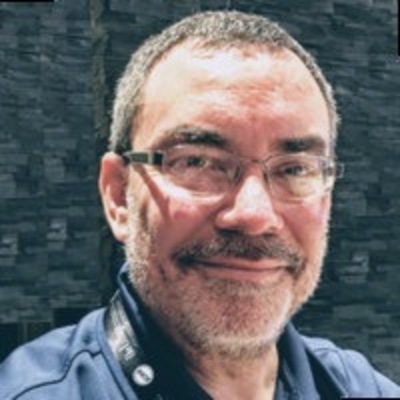
Mike Amundsen
Mike Amundsen is an internationally known author and speaker who consults on network architecture, web development, and the intersection of technology and society. His books include "Building Hypermedia APIs with HTML5 and Node", "RESTful Web APIs", "Microservice Architecture", "RESTful Web Clients", "Continuous API Management", "Design and Build Great Web APIs", and "RESTful Web API Patterns and Practices". Over the past decade Mike has co-authored most of his work with collaborators, and has spent much of his career bridging the practical and the academic — pulling lessons from Paul Otlet, Ted Nelson, Wendy Hall, and Leonard Richardson into the daily practice of building connected systems.

