
Emma Kriskinans is VP Global Marketing at Tyk, and since March she has done the bulk of her working day inside Claude Code and VS Code — not because anyone asked her to, but because she wanted to learn it at the harder level. This one is a two-way comparison of notes on using AI for go-to-market, between a marketing leader running a team inside a company with a brand to protect and a one-man band who answers to nobody. Emma walks through why she chose the IDE over the browser, using the UK driving test as the analogy — learn on a manual and you can drive an automatic, but not the other way around — the folder structure she keeps for Tyk work, advisory work, and personal work, and the trust hierarchy document that tells the model which sources to weight and when to come back and tell her it does not have one. We get into what she deliberately does not use it for, because she considers herself a writer and the generated prose lands in the uncanny valley, and into the etiquette forming around AI disclosure, the shaming that runs in both directions, and why neither of us thinks the dividing up of people is an accident. It ends somewhere neither of us planned, on novels, on the backstory you write and never publish, and on whether the humanities graduate's moment has finally arrived.
API Evangelist Conversation with Emma Kriskinans on Marketing from Inside VS Code, Building a Trust Hierarchy for Your Sources, and Filling In the Middle Ground on AI
Conversation
What does your setup look like?
Since about March I have mostly been using Claude and Claude Code. I do use Claude chat as well, but a lot of what I use that for is to interrogate what I have done in Claude Code, or the other way around. I would estimate I spend eighty percent of the time that is not in meetings inside Claude Code, in VS Code. I have really one repo — I am very much Fisher Price, my first GitHub account level — and almost everything I have got is in it, apart from the things I have put in gitignore. That does not just cover Tyk stuff. Tyk is my job and that is where most of this work goes, but I also do some advisory work, and I have personal folders, so I keep them separated out and make sure the same things do not get pulled through. I started writing about it partly because this moves so fast it is genuinely easy to forget what you have actually built.
I want to start at ground zero on VS Code from a marketer's perspective. What was that decision, and what has it been like for you?
Because I am stubborn. But genuinely, I did want to learn it at the harder level. The way I compare it is that in the UK you can take your driving test in a manual or an automatic, and if you learn on an automatic you cannot drive a manual — but if you learn on a manual you can drive both. I wanted to be able to drive the car manually. I am also a big believer that you learn from doing, so I think you just have to give it a go. I had a conversation with Anna Anderson, a fractional consultant doing a lot of AI go-to-market work, and she showed me what her setup was. Once you can see what is possible, you have a way to figure it out and you know what you are reaching towards. So I went and asked Claude how to build it, and that led me into VS Code. I did already have a GitHub account, but I had never really used it and never committed any code.
What does working in the IDE give you that the browser does not?
It feels to me like a lot more control. When I create a project in Claude chat, I do not find it as powerful as when I have got the folder sitting there and I can read it in the terminal. Using VS Code, because you can see the folder structure, helps you visually understand the architecture that is under the hood — to the extent that I now really struggle to use Claude in the browser, because I find it harder to get my head around the concepts. And going back to the power piece, I had a feeling that with Claude Code I would be able to build more directly. There are tools I specced out last year, when we had more of an AI engineering approach internally, where I was asking someone on the team to help me and they did not have the time. Now I have been able to build them myself.
How do you segment out the folder structure?
One of the things Anna taught me that was really helpful was this idea of a trust hierarchy. It is a context file that sits across my whole folder structure, and I might have a separate Tyk-specific one. What it does is say how to measure which sources are accurate and how to treat them — what you give the highest relevance to. Tier zero is my own created assets, my voice, my lived experience, my own data, anything I have actually created, more like my brain. Then first-party data, analysis, summaries and self-assessments, and AI-generated research or content sits further down. It has rules for what to do when it is not entirely sure where something fits, so it will tell me I have to check this, or that I do not have a source for it, or ask whether there is other data we can look at alongside it. I think when you are using AI you always have to engage your brain and check what is coming back — but this is a helpful flag.
What other rules have you built into it?
There are a few others. One is about age: after a certain number of days it will tell me this data has not been updated in ninety days, so go and have a look at it. I have actually been getting those the last few days and ignoring them, because I have not had time. There is front matter that always carries the date you last edited the file, and a confidence level, which matters especially where it is data. And when I have figured out how to do something I will log it — I will create a blog post, or some sort of file that tells me how I did this and what my thinking process was. The tooling is powerful at looking back through what you have discussed before, but obviously that uses a lot of tokens. So if I want to pick something up again, or it has been a few months and I am wondering how I built a tool, it is in the README. That is the part I suspect gets more unwieldy the more I do this, because it creates more and more content — but for the time being it is working quite well.
What is the next thing you have to figure out?
The collaboration part. We have already started working on it, creating a product brain and a marketing brain that we can all pull from. But what I am noticing is that everyone is still doing things differently, and until we get that sense of coherence across the tools, you lose consistency. Boilerplate is the really obvious boring example: we can all have a skill that runs boilerplate, but if it is pointing at different source material you are going to get three different versions, and they are all going to look like great boilerplate. I can see that becoming a problem over time. This is also quite separate from how we have built AI at Tyk on the engineering side, where there are multiple AI tools and chatbots we use internally — what I am describing is the marketing setup I am building for my smaller team. Plugging that all together, with the governance aspect as well, is the challenge.
What do you not use it for?
I actually find content creation the least valuable for me. I have done a lot of work on tone of voice, but I do not like what comes back — it feels a bit uncanny valley, and I have quite high standards on that, because I like to consider myself a writer. I have a personal Substack I never want to use AI for, because the reason I write is different from the reason I use AI. The actual act of writing is what helps you figure something out; it changes something in you, as well as producing whatever it is you have created. And selfishly, I am writing a novel at the moment, and when I submit it to publishers I do not want there to be any fear that I used AI to write it, because that has been blood, sweat and tears and I have not even finished it yet. I have found it harder to write creatively since I got really into AI.
Do you think marketers and other non-technical people have an appetite for this? Is anybody actually sharing how they do it?
I find it really curious. I posted something a couple of days ago about how you cannot just leave the door open when you create content with AI. There are massive amounts of content being created and passed to someone else for review, and when you read it, it is clear the person who generated it has not actually read it — the term is becoming a meat proxy, outsourcing how intelligent you are. Between that and the AI Act conversation around watermarking generated text, I saw a wave of people on LinkedIn suddenly say, of course I have been using AI, obviously I have. I said in the post that I was not trying to call anyone out, and some people still took it that way. I am more interested in why we feel the need to create these rules and this etiquette around AI while we are using it. People are using it, they are playing around with it, but nobody is actually sharing how — unless it is “I 10x’d my inbound,” which is the slightly snake oil version.
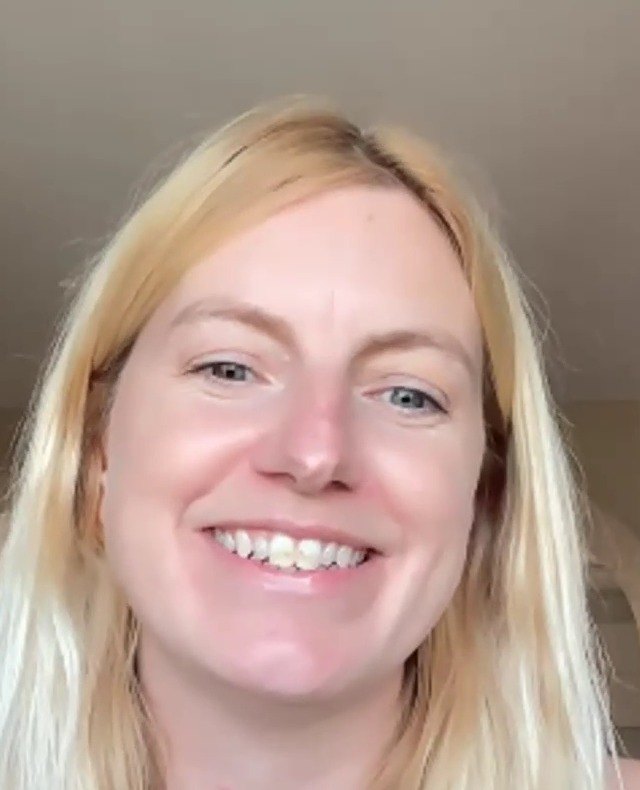
Emma Kriskinans
Emma Kriskinans is VP Global Marketing at Tyk, the API management and gateway company. She has worked in marketing for more than fifteen years, and since March 2026 has run most of her day-to-day work through Claude Code inside VS Code — building out a repo of context files, a trust hierarchy that rates the reliability of her sources, and prototype tools she had previously specced out for engineers who never had time to build them. She writes about what she is building, does some advisory work outside Tyk, and is rewriting a historical mystery novel that she writes entirely without AI.

