Lukasz Gornicki spent years as executive director of AsyncAPI, which means he has already run the experiment everyone else is still theorizing about — what a foundation actually does for a specification once the announcement is over. He is now part-time, and hoping to go full-time, at Open Source Europe, a Belgian association built as a European alternative to the US-based Open Source Collective. I brought him the question I have been carrying since I forked Spectral: where should a rule-set specification live. What I got back was not a recommendation, it was a set of distinctions. The Linux Foundation gave AsyncAPI intellectual property and trademark protection and very little else — protection that turns out to mean a free letter from a lawyer, after which you need a litigation budget you do not have. It funds no engineering work, which is why Open Source Collective had to exist alongside it. And one sponsor declined to renew specifically because AsyncAPI was part of the Linux Foundation. Lukasz walks the other options too — why Apache is the only foundation that will actually enforce a governance model on you, and the price it charges in your project's name; why Eclipse left the US for Canada; and what Open Source Europe can and cannot do today. Underneath all of it is the question he says has to come first, and that nobody in this conversation has answered yet: ask the people who would fund this what they actually care about, because open governance needs no foundation at all. Correction, added after recording: in this conversation I say the German government reached out and that Germany is committed. That overstates it — Germany has made no commitment. The Netherlands is the only government with a published, documented dependency on this format, in the developer.overheid.nl post of 31 July 2026. Conversations with Italy are ongoing and nothing is committed there either.
API Evangelist Conversation with Lukasz Gornicki on What the Linux Foundation Actually Gave AsyncAPI, Why a Sponsor Walked Away Because of It, and Open Source Europe as a Home for a Specification
Conversation
Before we dive into my needs, I want an update on your world. What are you working on, and what are your priorities?
Open source. I am now part-time involved with an association registered in Belgium called Open Source Europe. It is like Open Source Collective, which is where AsyncAPI is hosted, but Open Source Collective is US-based and Open Source Europe is purely Europe-based, to address the needs of Europe. There are a lot of projects that do not want to be hosted by entities registered in the US. I hope to be full-time on it in the next month, because right now it is just a fiscal host, and I want to do more than that. Our experience with AsyncAPI being hosted by Open Source Collective was that they were doing accounting, basically — making sure we could file expenses. They were not using their network of collectives for knowledge sharing or community building. That was missing for us, and that is what I want to change: provide more services, organize events, bring people together. There are a lot of cool projects there with knowledge that should be shared between them.
I have forked Spectral and it needs a home, and I do not want to own it. What was your actual experience taking AsyncAPI into the Linux Foundation?
At the very beginning it was really good for us, because Fran and I were pretty green. When Fran made the donation they came in with a charter template and some know-how we could reuse to kickstart. But we took it as a template and never followed their best practices for setting up the project, because the Linux Foundation is usually member projects and member companies — in OpenAPI, in GraphQL, in the end your governance is representatives of the companies that are members. From day one we said we just want the intellectual property and the trademark held by the Linux Foundation, and the rest we do on our own. They said you have to do open governance, but you do it the way you want. They reviewed our first charter, they did not enforce anything. They suggested that for the first few years we have an executive director with the right to veto any change, as a startup-phase safeguard against gaps in the governance being used against the community. Neither Fran nor I ever exercised it.
What does that intellectual property and trademark protection actually get you in practice?
It is really basic protection. If somebody uses the trademark — say Amazon called some product AsyncAPI and was reusing our trademark to sell something and we did not like it — we would go to the Linux Foundation and the Linux Foundation would, for free, send a letter signed by lawyers telling them they should not use it, that it is trademark protected. But that is it. If they did not listen, we would have to go to court, and we would have to have budget as a project to pay for lawyers, which I do not think is possible, especially in the US. So that is really what the IP protection is. Later you need real money to fight with giants, and the Linux Foundation will not sponsor that. The Linux Foundation also does not sponsor any work, any coding work. That is why we had to have Open Source Collective as well — so we could collect money, because we did not have an entity. They could sign a contract with our community manager on our behalf for that work, so she knew she had budget for the next year and it was not just our word.
Would you recommend it? What did it cost you?
There are pros and cons. We lost a lot of money. I can tell you that one of the sponsors still on the website today — we will remove them soon — said they will not renew because of the Linux Foundation. OpenAPI you probably know more about than I do; we also did not want to join them. So I guess I would not recommend it. I would recommend a separate organization. But the important thing is to understand what a foundation is really giving you. The Linux Foundation gave us IP and trademark protection, and that is the basic version of it. Many people still think foundations financially support projects, and they do not. You are really on your own when it comes to governance. It is you and your community that have to set it up and agree how you want to run it. There are a lot of governance models out there and you can pick one. There is not a single foundation that will enforce it on you.
What about the other options — Apache, Eclipse?
Apache is the exception. Apache has the PMC approach — every repository has PMCs, there is a whole standard approach to structuring projects, and you have to name it Apache, so it would be Apache Spectral or Apache Spotlight. They tell you how to govern the project. But they are the worst when it comes to collecting money, because if you want to collect money and do work based on money from the community, you cannot use the brand any more. I know someone who is on the board of Apache and is a PMC member on one of the projects, and he has a collective in Open Source Europe that he was not allowed to call by the name of that Apache project. He has to use a different name, which sucks. Then there is Eclipse, registered in Canada — in the end they wanted to escape from the US, they evaluated Belgium and Canada and chose Canada. They are nice; they recently started cooperating with Open Source Europe so that Eclipse projects can collect money officially under their own names.
So what should actually decide where it lives?
In the end it all depends on who the funding members of your project are. If the majority of them are people from Europe, it might be important to them that the project is under Open Source Europe, or at least the Eclipse Foundation. So those are really the questions you should ask first — to the community, to the people who would like to be funding members. What is critical for them? Go back to AsyncAPI. It was donated by Fran to the Linux Foundation a few years after we were already using Open Source Collective, because Microsoft and some others came in and said you have to donate this to a foundation. What they wanted was to make sure the IP and the trademark did not belong to Fran, so that Fran could not one day take the brand. So: are your funding members driven by IP and trademark, or are they just interested in making sure it is openly governed? Because you can have open governance without a foundation. You do not need a foundation for it. A foundation is needed when you actually need IP protection, fiscal hosting, or some other specific feature.
What would the onboarding look like if we moved down this street with Open Source Europe?
It is easy. You go to opencollective.com, create a new collective with the name of the project, and apply for Open Source Europe. I am the one accepting, so that is the easy part. Once we accept, we have an onboarding, but the onboarding is mostly teaching you how to use the platform — how expenses work, that you need admins, the radical transparency approach we follow on the Open Collective platform. And then of course you have me, whenever you want to get an idea or ask about anything. Our services already include fiscal hosting and grants. IP and trademark is in progress — I can prioritize it if that is a deal breaker, and you could be the first one protected that way. But I think what you most need is open governance, an actual move, and an announcement. That is it. I am also not going to be fully objective here, since I am now in Open Source Europe.
What about grants and sovereign funding?
If the Dutch government or the German government were planning to donate, it makes a difference for European governments that they are paying money in Europe and not outside. I am not sure if you are aware of the Sovereign Tech Fund from Germany — if they were to say that the Sovereign Tech Fund should maybe pay someone to work on this, that geography matters to them. The other good thing is that we support applying for grants to the European Union. Whenever you need to apply for a grant we can help out, and we can be a partner in the consortium, which makes the application easier. That is on top of the fiscal hosting.
Any advice on the name?
Be careful with the naming, because it sounds like your name will be super similar. You probably remember Postman and Postwoman — and Postwoman had to become Hopscotch. They had to do it because of lawyers. Swagger and OpenAPI is part of that same story. So the name is a critical one.
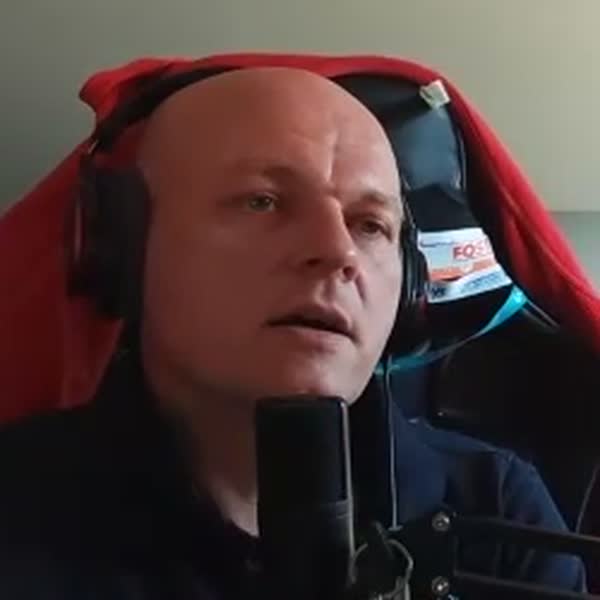
Lukasz Gornicki
Lukasz Gornicki is a long-time open source maintainer and was executive director of the AsyncAPI Initiative, which he helped take from Fran Mendez's personal project through a donation to the Linux Foundation and out the other side into a board-governed community. He is now part-time with Open Source Europe, a Belgium-registered association that provides fiscal hosting through Open Collective as a European counterpart to the US-based Open Source Collective, and is working to extend it beyond accounting into grant support, intellectual property protection, events, and knowledge sharing across the projects it hosts.